

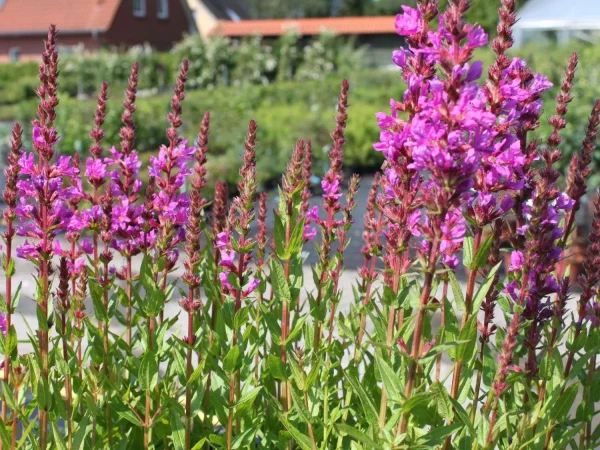
Lythrum salicaria ‘Rosy Gem’
Price range: £3.30 through £21.50
Description
Lythrum salicaria ‘Rosey Gem’ is a compact, richly coloured form of Purple Loosestrife, producing dense magenta‑rose flower spikes from mid‑summer into early autumn. This cultivar offers all the wildlife value of the native species but with a tidier, more controlled habit, making it ideal for smaller ponds, naturalistic schemes, and ornamental margins.
Supplied fresh from Artisan Aquatics, this is a vigorous, reliable, UK‑grown marginal that delivers height, colour, and pollinator activity throughout the warm months.
Key Features
- Compact cultivar of Purple Loosestrife
- Intense magenta‑rose flower spikes
- Highly attractive to bees, butterflies, and hoverflies
- Strong vertical accent for pond edges
- Hardy, long‑lived, and easy to grow
- Excellent for wildlife ponds and natural planting schemes
Planting & Positioning
- Planting depth: 0–10 cm above crown
- Position: Full sun for best flowering
- Ideal for: Pond margins, wet soils, bog gardens, naturalistic borders
- Growth habit: Upright clump‑forming perennial
- Flowering period: July–September
Care & Maintenance
- Cut back old stems in late autumn or early spring
- Divide every 2–3 years to maintain vigour
- Thrives in consistently moist soil
- Very hardy and tolerant of UK winters
Technical Data
- Botanical name: Lythrum salicaria ‘Rosey Gem’
- Growth rate: Medium–fast
- Supplied as: Bare‑root or potted (depending on stock)
- Wildlife value: Very high
- Native status: Cultivar of a UK native species
Companion Plant Suggestions
- Iris pseudacorus – bold yellow contrast
- Butomus umbellatus – soft pink umbels complement the spikes
- Mentha aquatica – aromatic, wildlife‑rich marginal
- Caltha palustris – early‑season colour before Lythrum blooms
FAQ
Is Lythrum salicaria ‘Rosey Gem’ invasive?
No — this is a compact cultivar with a controlled habit, unlike the more robust wild form.
Does it attract wildlife?
Yes, it is exceptional for pollinators, especially bees and butterflies.
Can it grow in normal garden soil?
Yes — as long as the soil stays moist, it performs well in borders as well as pond edges.
How tall does it grow?
Typically 60–80 cm, shorter than the wild species.
| PLANT TYPE | Marginal |
|---|---|
| FLOWER COLOUR | Pink |
| SUN/SHADE | Full sun |
| SEASON | Spring, Summer |
| HEIGHT MIN | 60 |
| HEIGHT MAX | 80 |
| DEPTH MIN | 0 |
| DEPTH MAX | 5 |
| SPREAD MIN | 0 |
| SPREAD MAX | 0 |
| FLOWER TIME | Jul to Sep |
| POT SIZE | 1 Litre, 1 Litre (pack of 3), 10 No. Plugs Bare Root, 3 Litres, 3 No. Medium Bare Root, 3 No. Small Bare Root, 9 cm (pack of 3), 9cm, Large Bare Root, Medium Bare Root, Plug Bare Root, Small Bare Root |